1 篇 PubMed 研究。 6 类受众。一键完成。
只需为内容引擎输入一篇研究,即可针对各类受众生成可直接发布的 LinkedIn 动态、销售单页及配图。
样本量
755,350
目标受众
6
内容类型
2
来源
Arthroplasty Today, 2020
Robotic TKA vs Conventional TKA: A Nationwide Database Study
Ofa SA, Ross BJ, Flick TR, Patel AH, Sherman WF • Arthroplasty Today, 2020
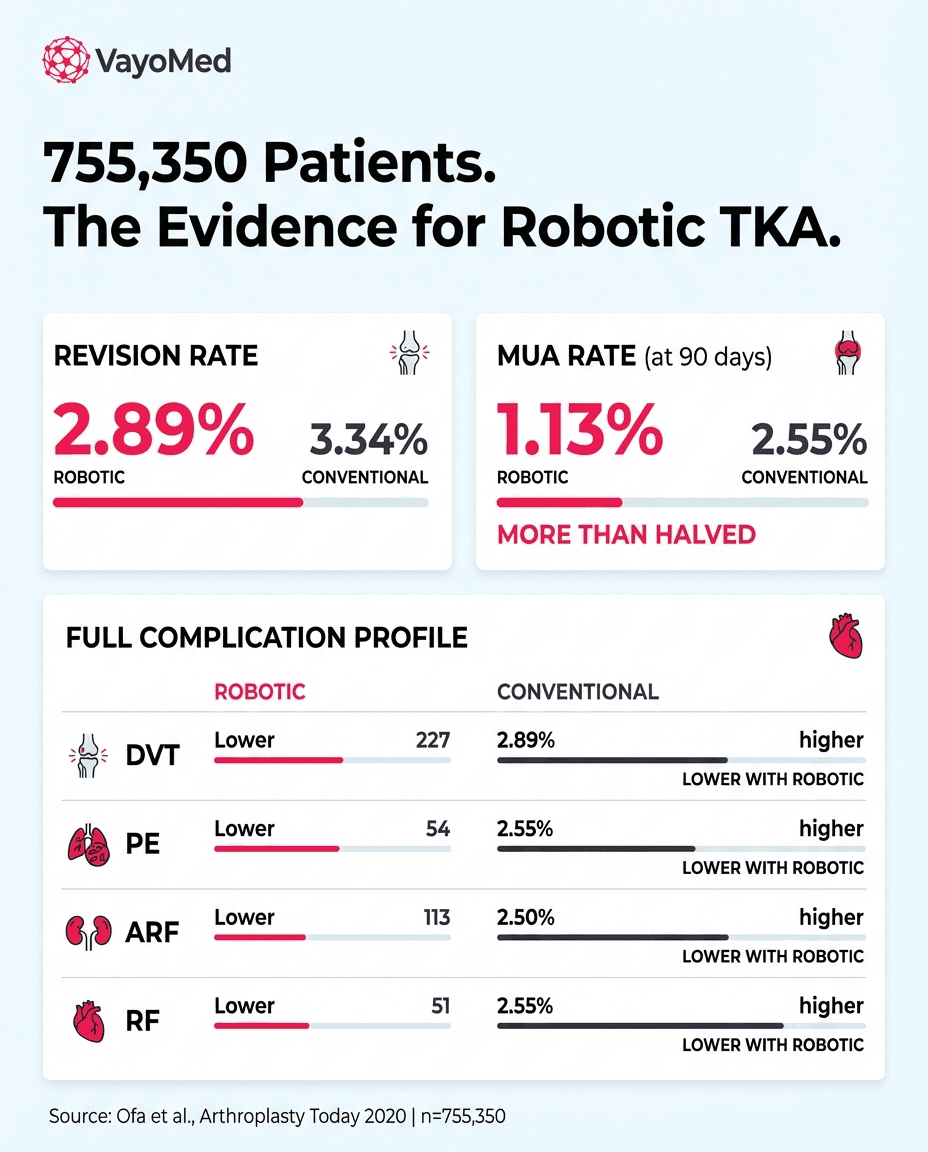
- Lower 1-year revision rates (2.89% vs 3.34%)
- MUA rates halved (1.13% vs 2.55% at 90 days)
- 42% lower opioid use at 1 year (3,578 vs 6,203 MME)
- Lower readmission rate (5.01% vs 6.53%)
- Fewer systemic complications (DVT, PE, anemia, ARF)
6 类受众。多种内容类型。 一键完成。
点击任意缩略图即可预览完整内容——LinkedIn 动态按信息流呈现效果渲染,销售单页随时可供下载。
Orthopedic Surgeons
临床结局与翻修率
他们关注:关于翻修率、并发症特征及临床优势的硬核数据。

CTO @ Pure Global | 10x MedTech Global Access | AI + Regulatory Intelli...
755,350 patients. One of the largest comparative studies in TKA history. The data from Ofa et al. is hard to ignore: → 1-year revision rate: 2.89% robotic vs 3.34% conventional → MUA rates more than halved: 1.13% vs 2.55% at 90 days → Lower DVT (0.29% vs 0.71%), PE (0.13% vs 0.54%), and ARF rates With adjusted ORs consistently favoring robotic-assisted TKA across joint and systemic complications, the evidence base for adoption continues to strengthen. The question is shifting from "should I adopt?" to "when do I start?" 📄 Ofa SA et al., Arthroplasty Today, 2020 | PMID: 33385042 #OrthopedicSurgery #RoboticTKA #TotalKneeArthroplasty #EvidenceBasedMedicine #JointReplacement
Hospital Administrators
成本削减与再入院费用节省
他们关注:投资回报率(ROI)与风险降低——再入院费用节省及成本避免。
CTO @ Pure Global | 10x MedTech Global Access | AI + Regulatory Intelli...
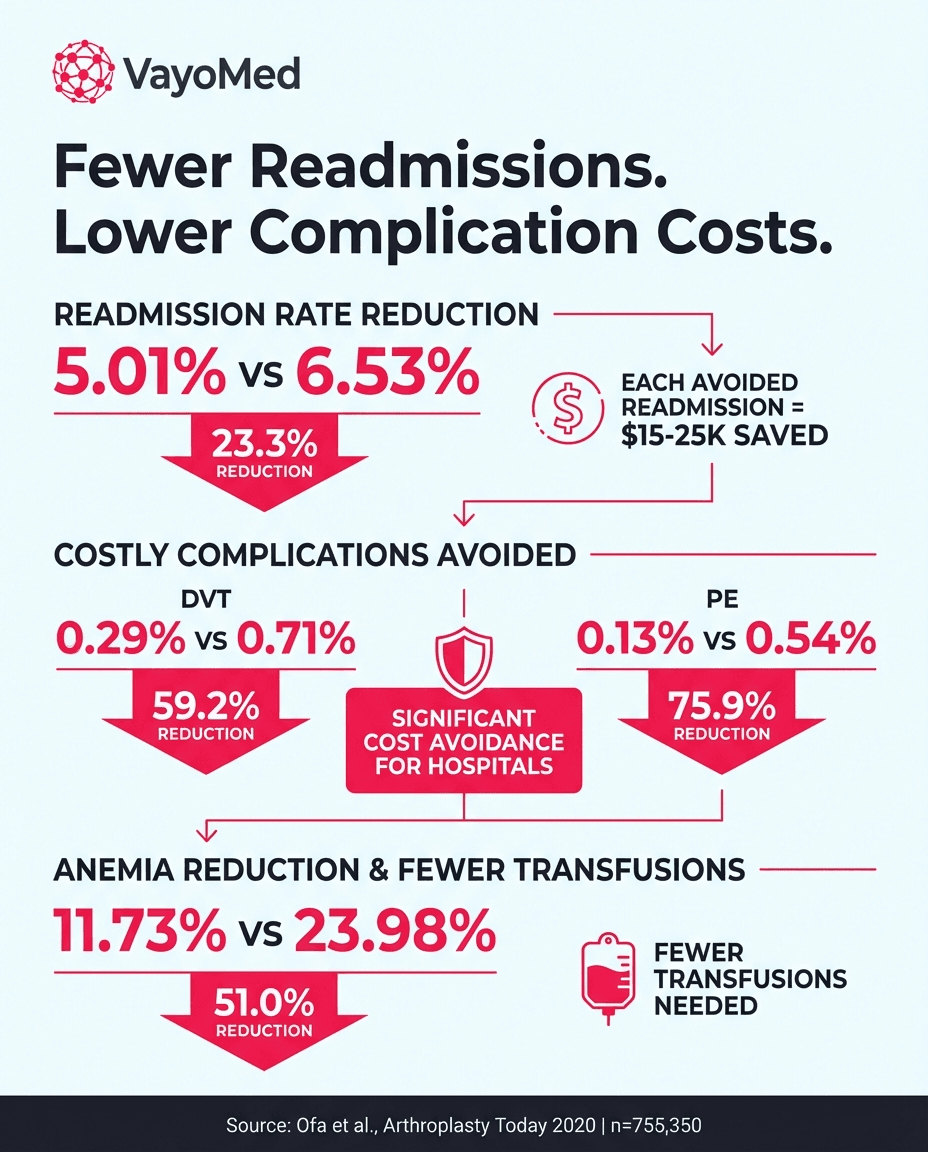
The financial case for robotic TKA isn't about the sticker price — it's about what you stop paying for. In a study of 755,350 patients (Ofa et al., 2020): → Readmission rate dropped from 6.53% to 5.01% → DVT cut by more than half (0.29% vs 0.71%) → PE reduced from 0.54% to 0.13% → Anemia rates halved (11.73% vs 23.98%) Every avoided readmission saves $15-25K. Every prevented DVT or PE avoids extended stays and liability exposure. The robot isn't a cost center. It's a risk reduction platform. #HealthcareLeadership #HospitalAdministration #RoboticSurgery #ValueBasedCare #HealthEconomics
Procurement / Value Analysis
用于 VAC 评估的循证总结
他们关注:供 VAC 委员会会议使用的全面循证总结。
CTO @ Pure Global | 10x MedTech Global Access | AI + Regulatory Intelli...
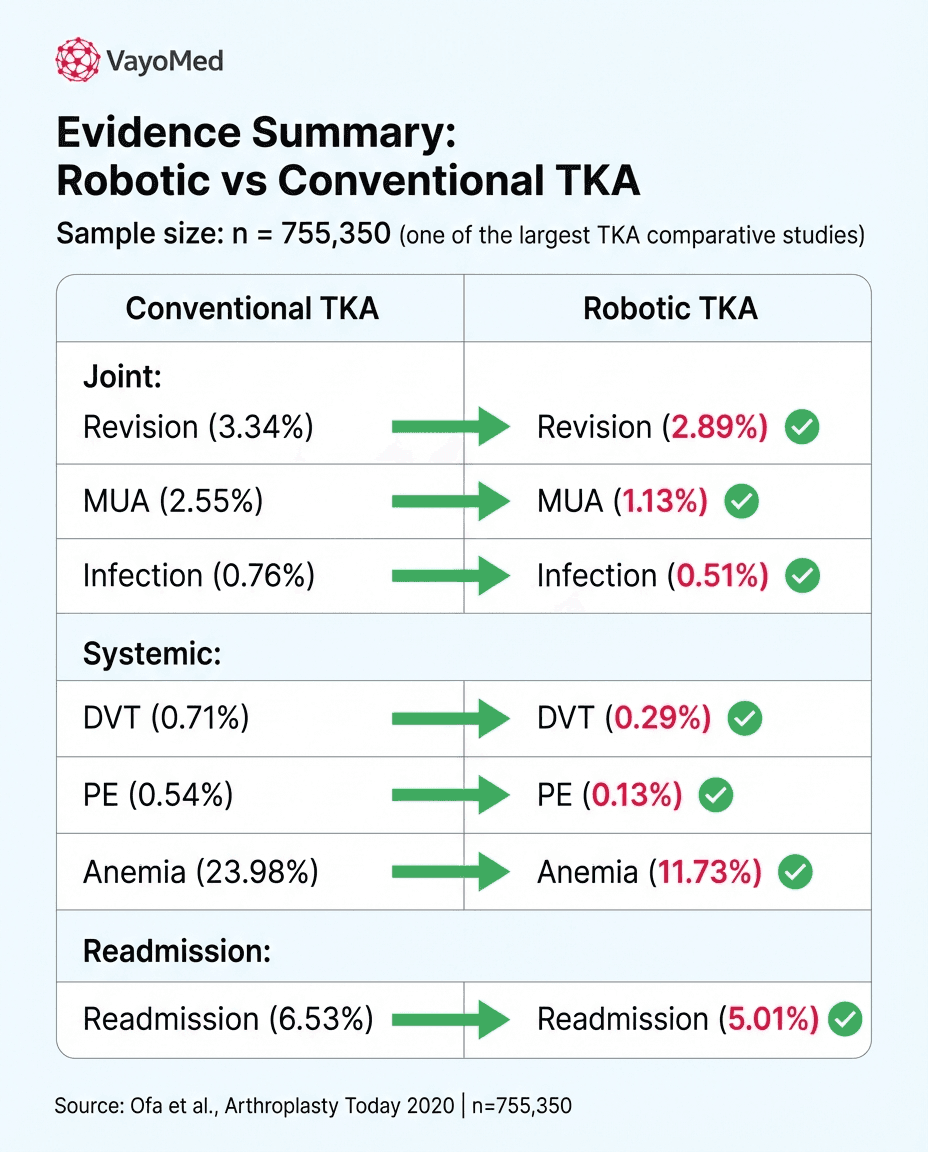
If your value analysis committee is evaluating robotic-assisted TKA, this is the study to start with. n = 755,350 patients. National database. Every outcome metric favoring robotic or equivalent. Key findings: → Revision: 2.89% vs 3.34% → MUA: 1.13% vs 2.55% → Readmission: 5.01% vs 6.53% → DVT: 0.29% vs 0.71% → Anemia: 11.73% vs 23.98% Sample size alone makes this one of the most credible comparative analyses available for capital equipment decisions in orthopedics. Save this for your next committee meeting. 📄 Ofa SA et al., Arthroplasty Today, 2020 #Procurement #ValueAnalysis #MedicalDevices #HealthTech #EvidenceReview
Biomedical Engineers
技术应用与平台演进
他们关注:技术发展轨迹、应用曲线及平台演进。
CTO @ Pure Global | 10x MedTech Global Access | AI + Regulatory Intelli...
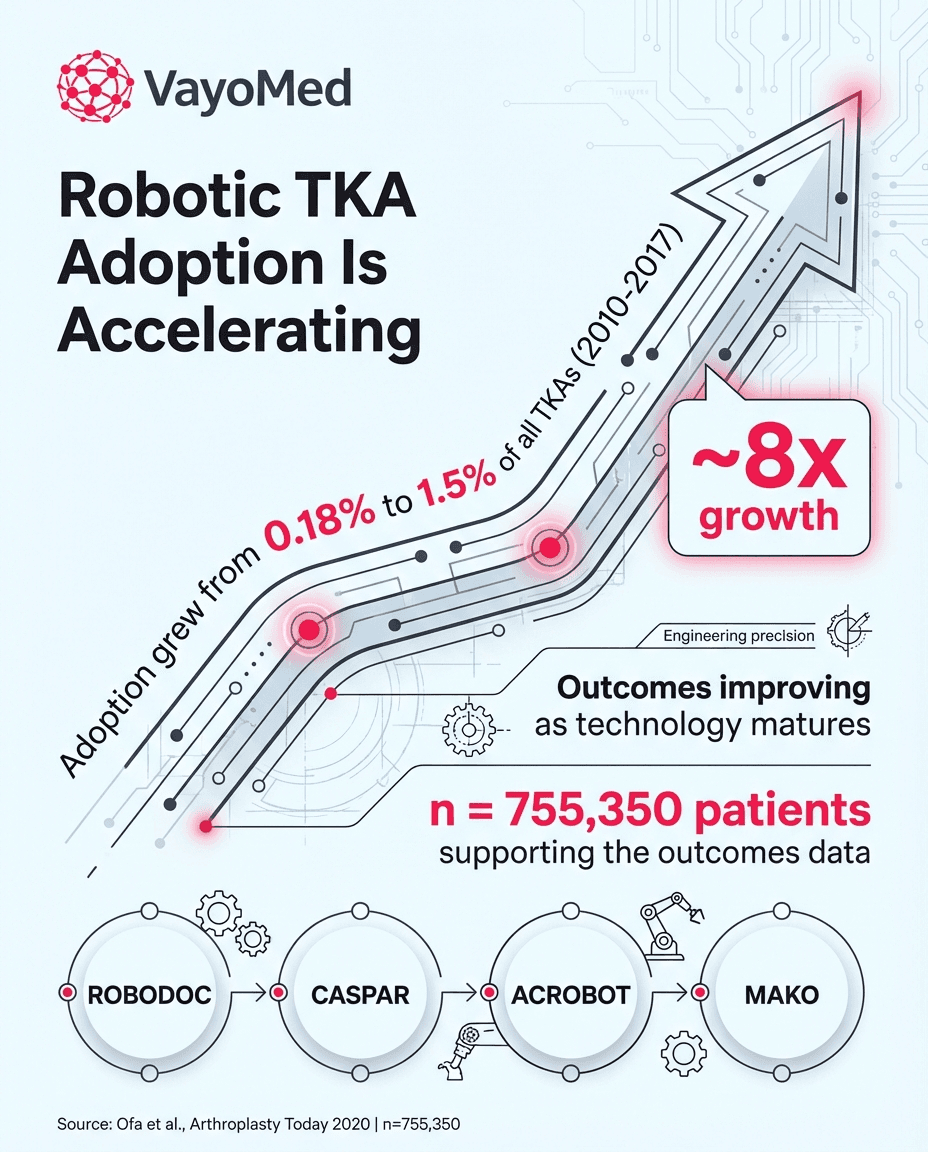
Robotic-assisted TKA went from 0.18% to 1.5% adoption in seven years — and that was 2017. The technology evolution tells the story: ROBODOC → CASPAR → ACROBOT → MAKO Each generation brought better navigation, faster registration, and improved outcomes. In a 755,350-patient study, robotic TKA showed lower revision rates, fewer complications, and reduced opioid use. We're still in the early adoption curve. The engineering challenges ahead — real-time tissue sensing, AI-assisted planning, haptic feedback refinement — will define the next decade of OR integration. 📄 Ofa SA et al., Arthroplasty Today, 2020 #BiomedicalEngineering #RoboticSurgery #MedTech #SurgicalRobotics #HealthcareInnovation
Referring Physicians
阿片类药物减量与患者安全
他们关注:患者安全数据——阿片类药物减量、并发症发生率。
CTO @ Pure Global | 10x MedTech Global Access | AI + Regulatory Intelli...
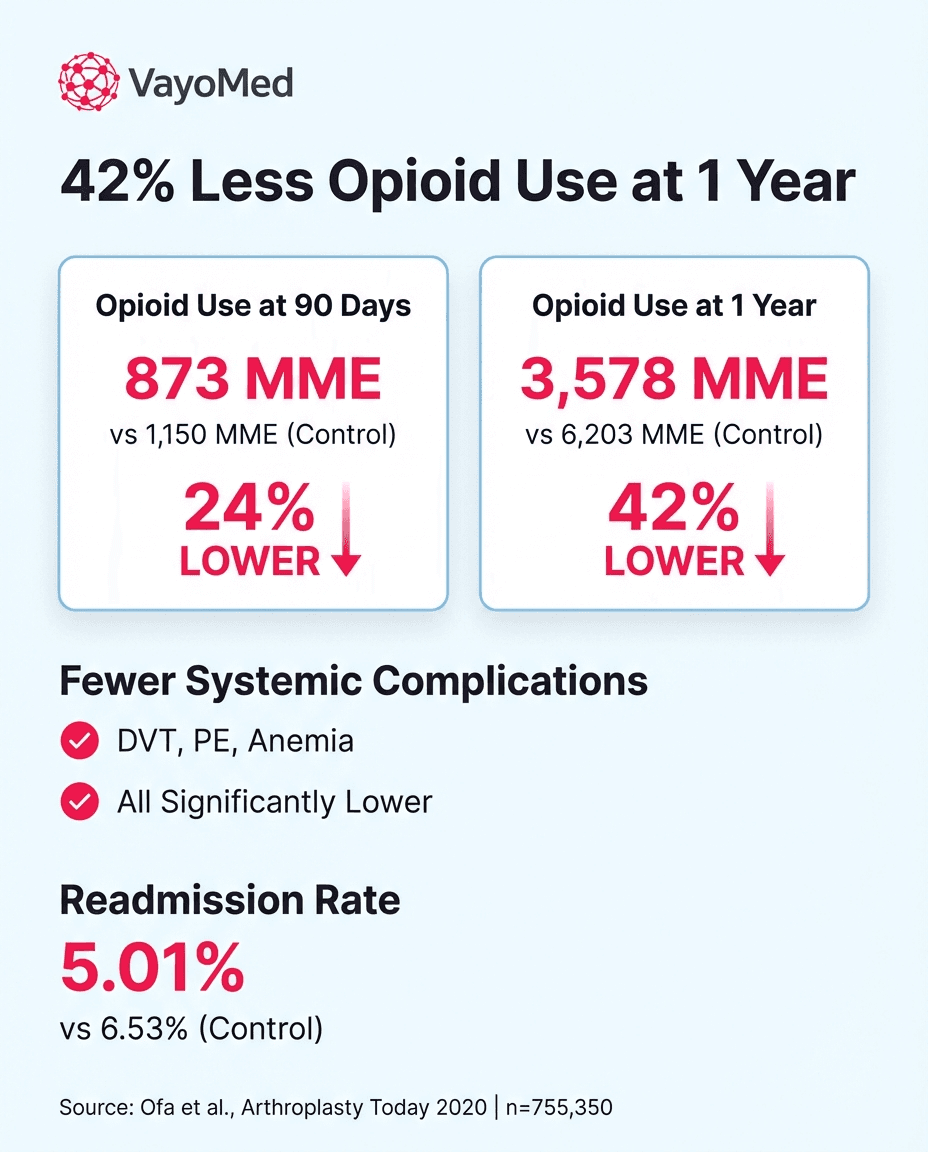
When you refer a patient for knee replacement, opioid use is on your mind. In 755,350 patients (Ofa et al., 2020), robotic-assisted TKA showed: → 24% lower opioid use at 90 days (873 vs 1,150 MME) → 42% lower opioid use at 1 year (3,578 vs 6,203 MME) → Lower DVT, PE, and readmission rates → Half the anemia rate (fewer transfusions) This isn't about the technology in the OR. It's about the patient journey after — less pain, fewer complications, fewer callbacks. Robotic TKA is becoming the safer referral. #PrimaryCare #OpioidReduction #PatientSafety #Orthopedics #ReferringPhysicians
Patients
通俗易懂的康复获益说明
他们关注:关于康复的简单安心解答——毫无专业术语障碍。
CTO @ Pure Global | 10x MedTech Global Access | AI + Regulatory Intelli...
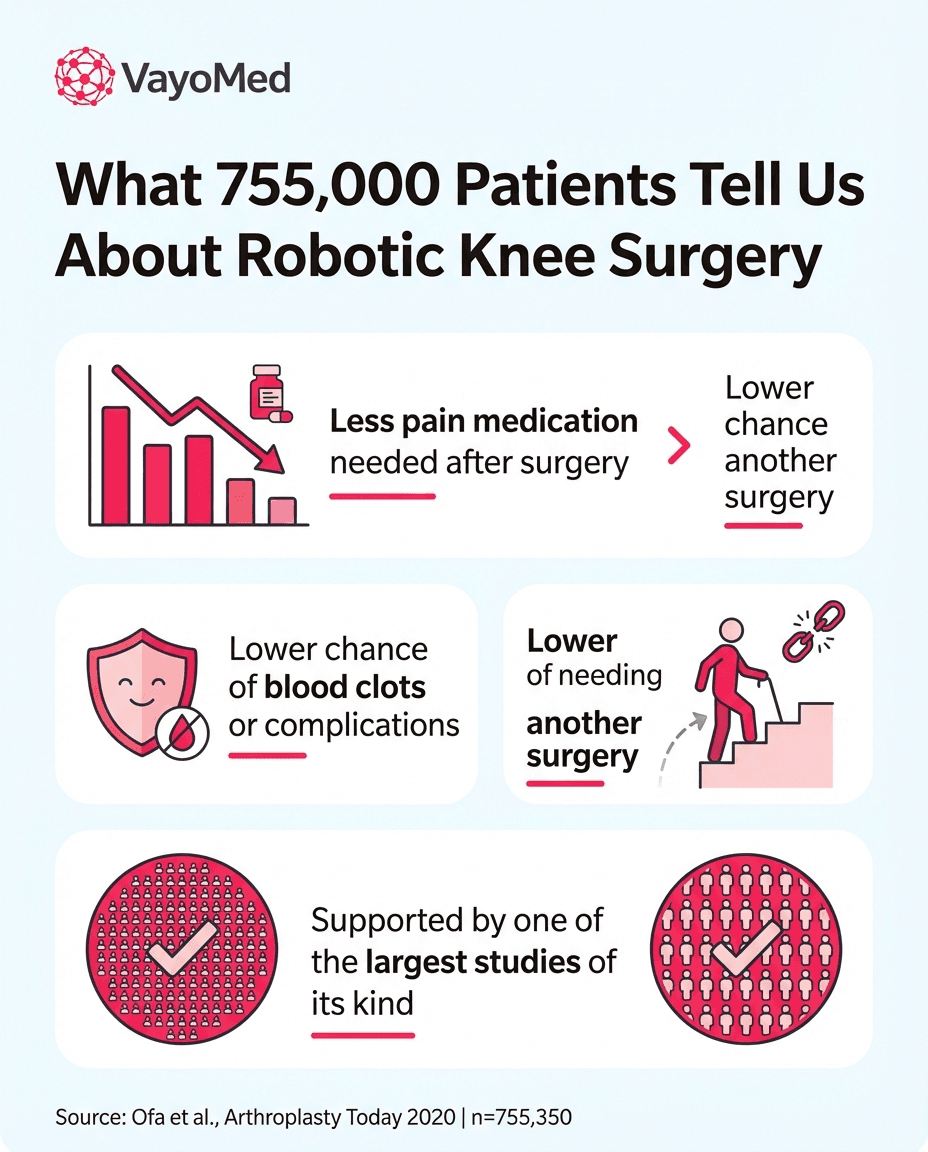
If you're considering knee replacement surgery, you might be wondering about robotic-assisted options. Here's what a study of over 755,000 patients found: ✅ Less pain medication needed after surgery ✅ Lower chance of blood clots ✅ Fewer hospital readmissions ✅ Lower chance of needing a second surgery Robotic-assisted knee surgery uses advanced technology to help your surgeon be more precise — which can mean a smoother recovery for you. Talk to your doctor about whether robotic-assisted knee replacement is right for you. 📄 Based on Ofa et al., Arthroplasty Today, 2020 (755,350 patients) #KneeReplacement #RoboticSurgery #PatientEducation #JointHealth #OrthopedicCare