
1件のPubMed論文。 6個のターゲット層。ワンクリックで。
コンテンツエンジンに論文を1件入力するだけで、あらゆるターゲット層に向けたLinkedInの投稿、営業用ワンページャー、画像が作成され、すぐに公開できる状態で生成されます。
サンプルサイズ
755,350
対象ターゲット層
6
コンテンツ形式
2
出典
Arthroplasty Today, 2020
Robotic TKA vs Conventional TKA: A Nationwide Database Study
Ofa SA, Ross BJ, Flick TR, Patel AH, Sherman WF • Arthroplasty Today, 2020
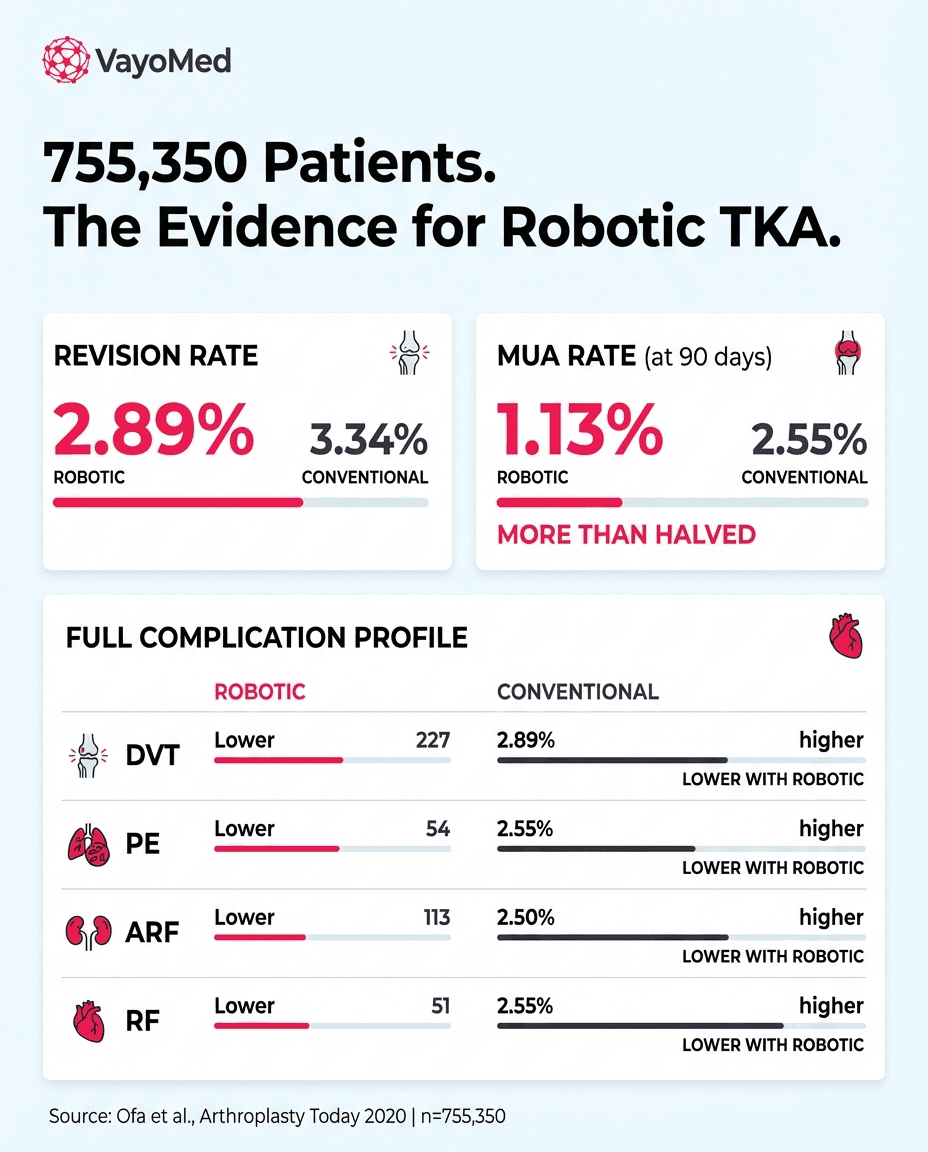
- Lower 1-year revision rates (2.89% vs 3.34%)
- MUA rates halved (1.13% vs 2.55% at 90 days)
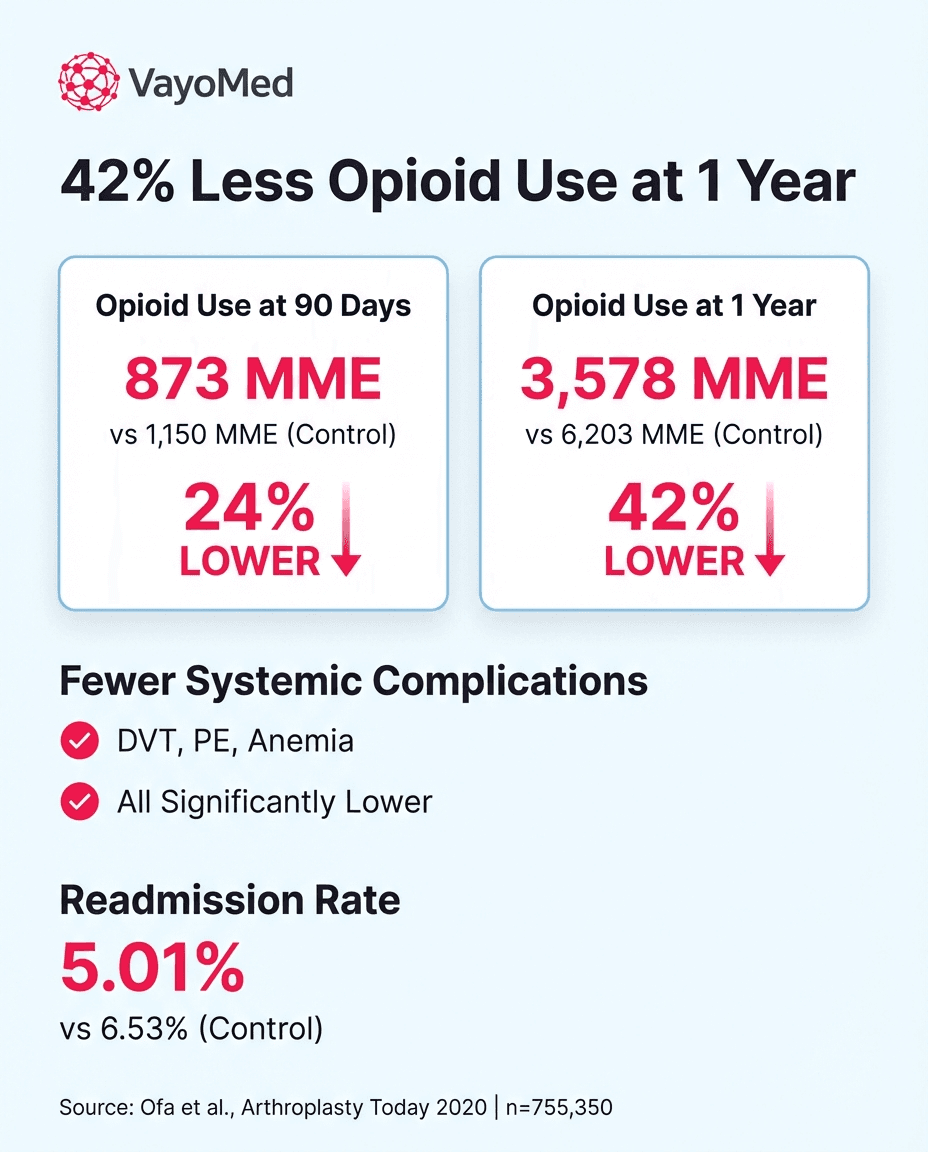
- 42% lower opioid use at 1 year (3,578 vs 6,203 MME)
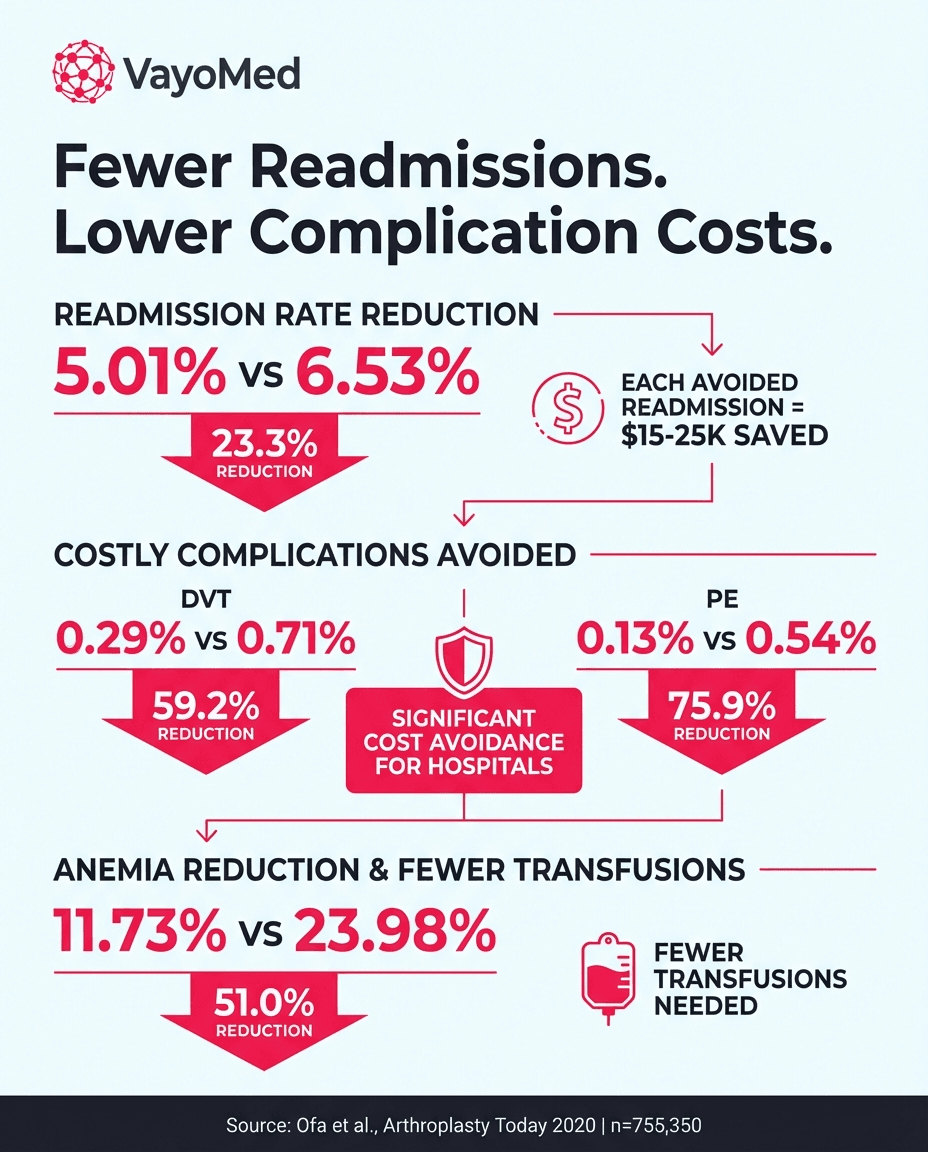
- Lower readmission rate (5.01% vs 6.53%)
- Fewer systemic complications (DVT, PE, anemia, ARF)
6個のターゲット層。複数のコンテンツ形式。 ワンクリック。
サムネイルをクリックするとコンテンツ全体をプレビューできます。LinkedInの投稿はフィードでの表示通りの状態でレンダリングされ、ワンページャーはダウンロード可能な状態で準備されます。
Orthopedic Surgeons
臨床アウトカムと再手術率
求める情報:再手術率、合併症プロファイル、および臨床的優位性に関する確かなデータ。

CTO @ Pure Global | 10x MedTech Global Access | AI + Regulatory Intelli...
755,350 patients. One of the largest comparative studies in TKA history. The data from Ofa et al. is hard to ignore: → 1-year revision rate: 2.89% robotic vs 3.34% conventional → MUA rates more than halved: 1.13% vs 2.55% at 90 days → Lower DVT (0.29% vs 0.71%), PE (0.13% vs 0.54%), and ARF rates With adjusted ORs consistently favoring robotic-assisted TKA across joint and systemic complications, the evidence base for adoption continues to strengthen. The question is shifting from "should I adopt?" to "when do I start?" 📄 Ofa SA et al., Arthroplasty Today, 2020 | PMID: 33385042 #OrthopedicSurgery #RoboticTKA #TotalKneeArthroplasty #EvidenceBasedMedicine #JointReplacement
Hospital Administrators
コスト削減と再入院費用の節減
求める情報:ROIとリスク低減 — 再入院費用の節減およびコスト回避。
CTO @ Pure Global | 10x MedTech Global Access | AI + Regulatory Intelli...
The financial case for robotic TKA isn't about the sticker price — it's about what you stop paying for. In a study of 755,350 patients (Ofa et al., 2020): → Readmission rate dropped from 6.53% to 5.01% → DVT cut by more than half (0.29% vs 0.71%) → PE reduced from 0.54% to 0.13% → Anemia rates halved (11.73% vs 23.98%) Every avoided readmission saves $15-25K. Every prevented DVT or PE avoids extended stays and liability exposure. The robot isn't a cost center. It's a risk reduction platform. #HealthcareLeadership #HospitalAdministration #RoboticSurgery #ValueBasedCare #HealthEconomics
Procurement / Value Analysis
VAC(用度委員会)評価用エビデンス要約
求める情報:VAC(用度委員会)会議向けの包括的なエビデンス要約。
CTO @ Pure Global | 10x MedTech Global Access | AI + Regulatory Intelli...
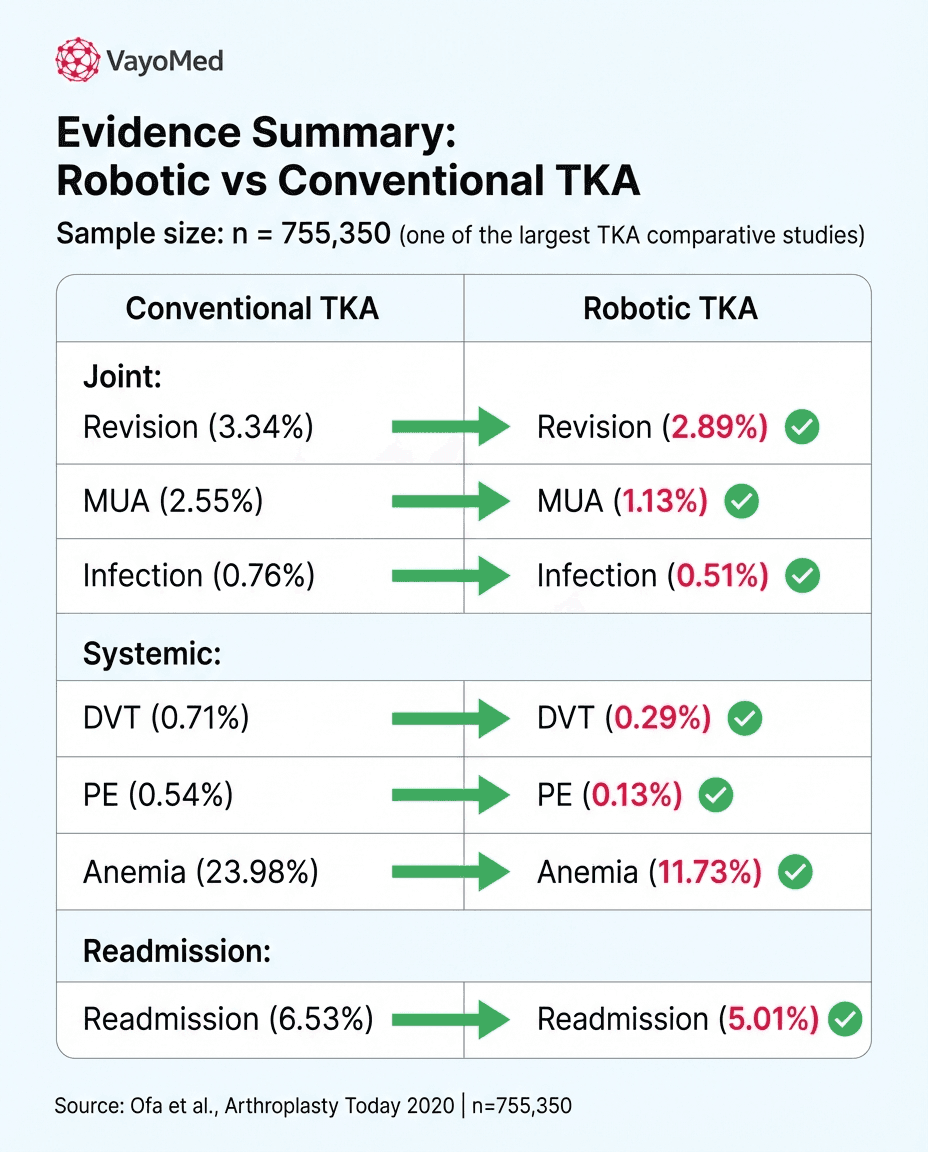
If your value analysis committee is evaluating robotic-assisted TKA, this is the study to start with. n = 755,350 patients. National database. Every outcome metric favoring robotic or equivalent. Key findings: → Revision: 2.89% vs 3.34% → MUA: 1.13% vs 2.55% → Readmission: 5.01% vs 6.53% → DVT: 0.29% vs 0.71% → Anemia: 11.73% vs 23.98% Sample size alone makes this one of the most credible comparative analyses available for capital equipment decisions in orthopedics. Save this for your next committee meeting. 📄 Ofa SA et al., Arthroplasty Today, 2020 #Procurement #ValueAnalysis #MedicalDevices #HealthTech #EvidenceReview
Biomedical Engineers
技術導入とプラットフォームの進化
求める情報:技術の方向性、導入曲線、およびプラットフォームの進化。
CTO @ Pure Global | 10x MedTech Global Access | AI + Regulatory Intelli...
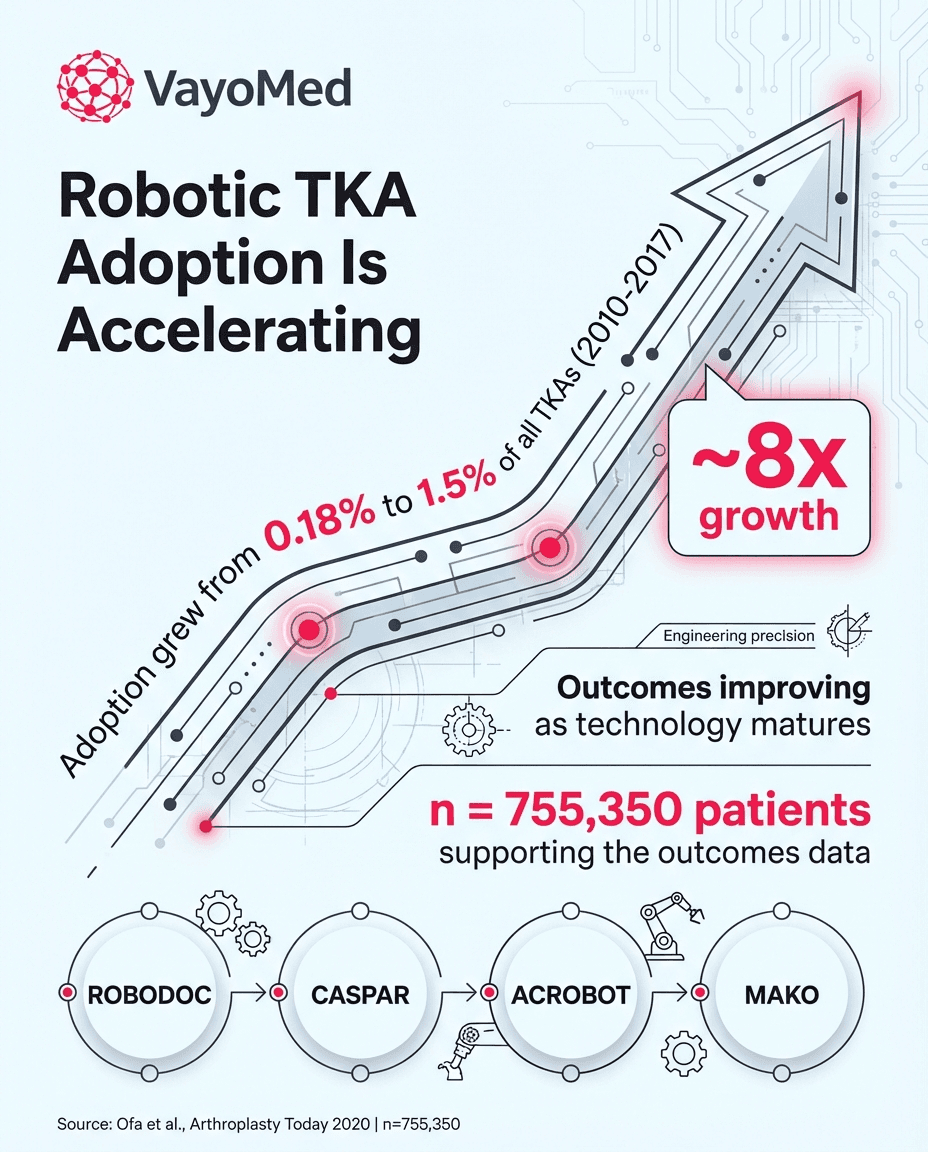
Robotic-assisted TKA went from 0.18% to 1.5% adoption in seven years — and that was 2017. The technology evolution tells the story: ROBODOC → CASPAR → ACROBOT → MAKO Each generation brought better navigation, faster registration, and improved outcomes. In a 755,350-patient study, robotic TKA showed lower revision rates, fewer complications, and reduced opioid use. We're still in the early adoption curve. The engineering challenges ahead — real-time tissue sensing, AI-assisted planning, haptic feedback refinement — will define the next decade of OR integration. 📄 Ofa SA et al., Arthroplasty Today, 2020 #BiomedicalEngineering #RoboticSurgery #MedTech #SurgicalRobotics #HealthcareInnovation
Referring Physicians
オピオイド使用量の削減と患者の安全性
求める情報:患者の安全性に関するデータ — オピオイド削減、合併症発生率。
CTO @ Pure Global | 10x MedTech Global Access | AI + Regulatory Intelli...
When you refer a patient for knee replacement, opioid use is on your mind. In 755,350 patients (Ofa et al., 2020), robotic-assisted TKA showed: → 24% lower opioid use at 90 days (873 vs 1,150 MME) → 42% lower opioid use at 1 year (3,578 vs 6,203 MME) → Lower DVT, PE, and readmission rates → Half the anemia rate (fewer transfusions) This isn't about the technology in the OR. It's about the patient journey after — less pain, fewer complications, fewer callbacks. Robotic TKA is becoming the safer referral. #PrimaryCare #OpioidReduction #PatientSafety #Orthopedics #ReferringPhysicians
Patients
わかりやすい言葉で伝える回復上のメリット
求める情報:専門用語を使わない、回復に関するシンプルで安心できる回答。
CTO @ Pure Global | 10x MedTech Global Access | AI + Regulatory Intelli...
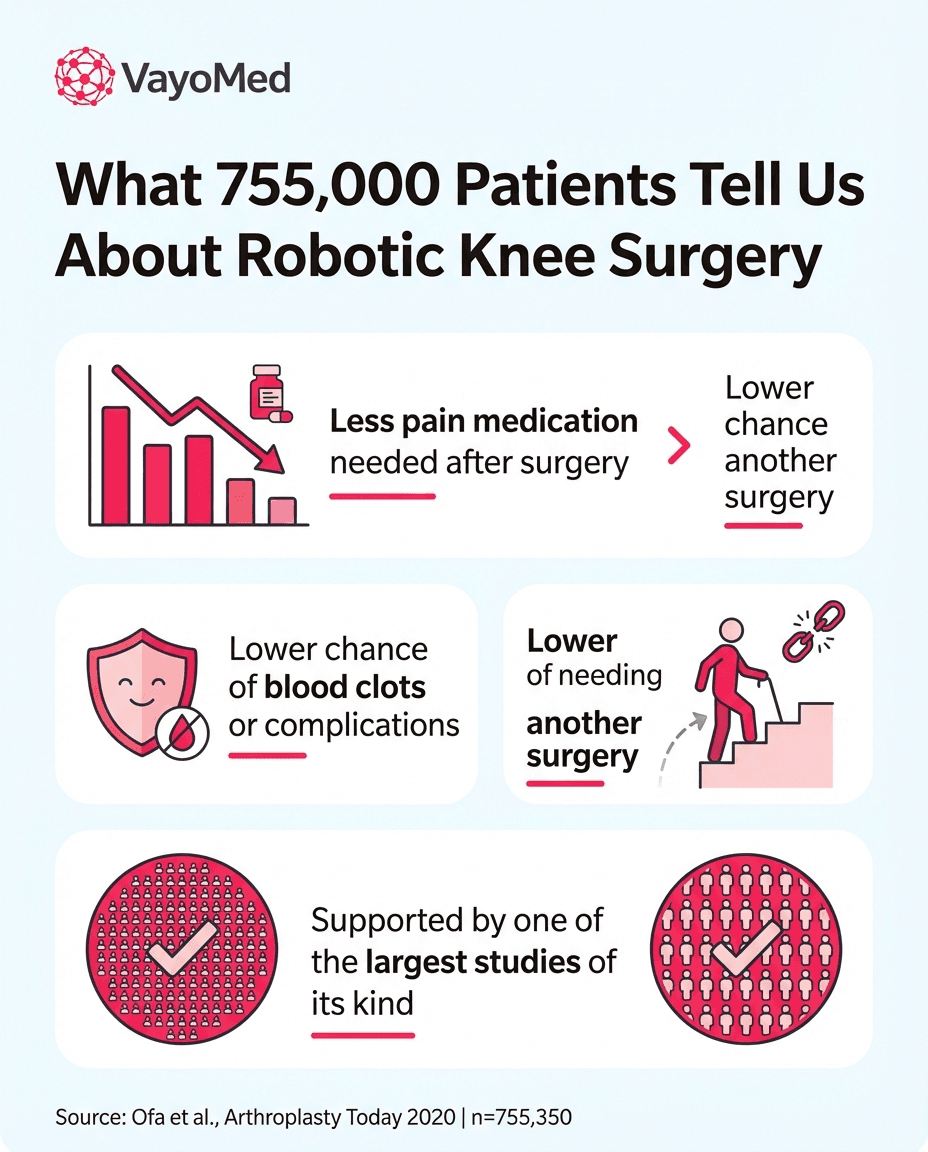
If you're considering knee replacement surgery, you might be wondering about robotic-assisted options. Here's what a study of over 755,000 patients found: ✅ Less pain medication needed after surgery ✅ Lower chance of blood clots ✅ Fewer hospital readmissions ✅ Lower chance of needing a second surgery Robotic-assisted knee surgery uses advanced technology to help your surgeon be more precise — which can mean a smoother recovery for you. Talk to your doctor about whether robotic-assisted knee replacement is right for you. 📄 Based on Ofa et al., Arthroplasty Today, 2020 (755,350 patients) #KneeReplacement #RoboticSurgery #PatientEducation #JointHealth #OrthopedicCare
貴社のお手元にある臨床エビデンスでコンテンツエンジンが何を実現できるか ぜひお確かめください。
PubMed論文、臨床ホワイトペーパー、製品エビデンス資料などをお送りください。ターゲット層に最適化されたコンテンツの仕上がりを無料でお見せいたします。
無料のコンテンツプランを取得する